


A reliable source for Wolverine Stack research materials is one that shows its credentials, explains how its products are made and tested, backs its claims with evidence, and has feedback from real past buyers. If a supplier can’t tick all four boxes, keep looking. That’s the whole method, and it takes about 15 minutes of checking before you spend a cent. You can read the full stack details for one example of what a product listing looks like, then use the same checklist on any supplier you’re weighing up.
The reason it works is simple. Research materials sit in a space where marketing noise is loud and verified detail is thin on the ground. A supplier who is open about who they are, how they work and what their documentation says is far easier to trust than one relying on big promises.
Key Takeaway: A reliable source shows its credentials, explains its methods, backs claims with evidence, and has feedback from real past users. Check all four before you buy, and treat any gaps as a reason to compare other options.
It’s the same approach we recommend for big purchases like solar systems, where Australian homeowners get the best results by comparing several providers and reading genuine customer feedback. The principle carries over: informed comparison beats a quick decision every time. The sections below break down the criteria, the main source types, and the mistakes worth avoiding.
Key Buying Factors: What Makes a Research Source Trustworthy
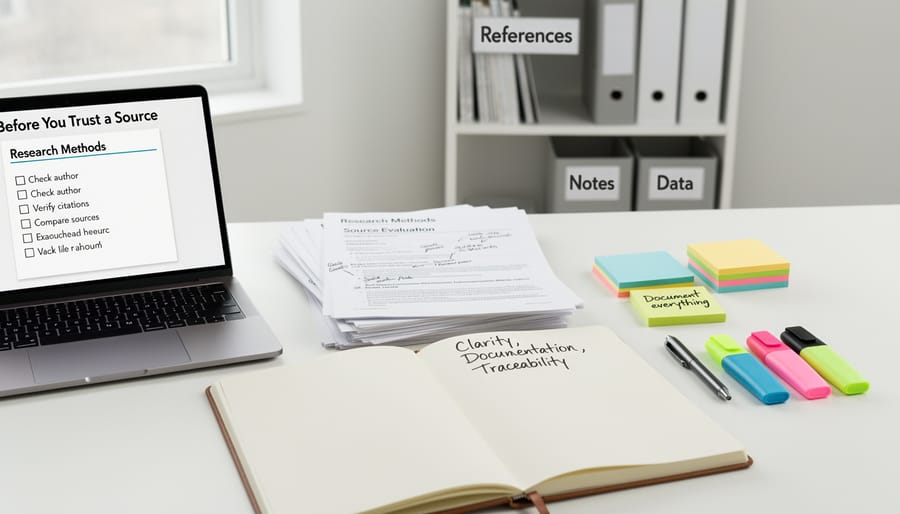
Credentials, Transparency and Track Record
Start with the simplest question: who is actually behind this source? A trustworthy supplier or publisher puts its name, business address and contact details where you can find them. Look for a registered business name, a working phone number or email, and clear authorship on any guides or data sheets. If you can’t tell who wrote something or who stands behind a product, treat that as a red flag.
Think about how you’d vet a solar installer. You’d check their accreditation, confirm they hold the right licenses to sell solar and ask how long they’ve been operating. Local installers are usually happy to share this openly, because it builds confidence. The same logic applies to any source of Wolverine Stack research materials. A business that hides its registration or dodges simple questions about its history probably isn’t one you want to rely on.
Track record matters too. A source that has operated for several years, with a consistent name and a stable web presence, is generally a safer bet than one that appeared last month. For Australian suppliers, you can look up an ABN on the public ABN Lookup to confirm the business exists and is active.
None of this guarantees quality on its own, but it gives you a solid starting point before you look at the evidence behind the materials.
Evidence, Testing and Documentation
A reliable source should be able to back up its claims with paperwork you can actually read. A confident-sounding product page isn’t proof. A real source hands over documents, and it does so without making you chase.
Before you trust a source, ask for:
- A data sheet listing the material’s specifications, such as composition, quantity and storage requirements.
- A certificate of analysis (a lab report confirming what’s inside) that names the batch you’re buying.
- Test results that state the method used and who did the testing.
- The testing lab’s name and contact details, so you can confirm the report is genuine.
- References or citations that link to original studies, not just other sellers’ pages.
- Dated documents, so you know the information is current.
Vague claims are easy to spot once you know the pattern. Phrases like “lab tested”, “premium quality” or “trusted by thousands” sound reassuring but prove nothing without a report behind them. Watch for results with no batch number, documents with no date or lab name, and references that circle back to the seller’s own website.
It’s the same thinking Australians use when they ask a solar installer for panel certifications instead of taking a sales pitch on trust. If a source can’t or won’t produce documents when you ask politely, that tells you plenty. A reliable one will usually be glad you asked.
Customer Feedback and Independent Reviews
Reviews can be one of your most useful tools, as long as you read them with a little scepticism. A single glowing comment tells you very little. A handful of similar comments, appearing across different places, tells you a lot.
Start by looking for patterns. If several buyers mention slow replies, missing documentation or items that didn’t match the description, treat that as a genuine signal. The same goes for repeated praise about clear communication or accurate listings. One-off rants and one-off raves are worth noting but shouldn’t decide anything on their own.
Next, weigh where the feedback lives. Testimonials hosted on the seller’s own site are chosen by the seller, so they’ll almost always be positive. Independent platforms, community forums and third-party review sites give you a more balanced picture. This mirrors how we encourage people to rely on real past-customer feedback when comparing solar installers, rather than polished marketing copy.
Watch for warning signs too: lots of reviews posted in a short window, vague praise with no detail, or identical wording across different reviewers. Be wary of suppliers making bold promises, since false or misleading claims are a real concern in online selling. When in doubt, favour detailed, specific reviews over short, glowing ones.
Types of Sources Compared: Where Research Materials Come From
Research materials rarely come from one obvious place, so it helps to know the main kinds of source and what each one tends to offer. None is automatically good or bad. What matters is how well each can show you where its material came from and how it was checked.
| Source type | Typical strengths | Typical risks | What to verify before relying on it |
|---|---|---|---|
| Manufacturer or primary supplier | Closest to the original product, so documentation and batch information are often most complete | May have limited support for small buyers or less flexible return terms | Business registration, published contact details, and available test or specification documents |
| Specialist retailer | Focused knowledge, curated range and helpful customer service | Quality depends on who they buy from, and they may repeat supplier claims without checking | Where stock is sourced, how long they’ve traded, and whether they share supporting evidence |
| Reseller or online marketplace | Wide choice, easy price comparison and visible buyer ratings | Hard to trace the original maker, and ratings can be thin or easily influenced | The actual seller’s identity, the product’s origin, and the platform’s dispute and refund process |
| Independent publisher, academic or industry body | Impartial, referenced and often peer-reviewed or standards-based | Can be technical, slower to update, or not written for general readers | Authorship, publication date, cited references and any funding or commercial links |
Think of this like comparing solar providers. A manufacturer is a bit like going straight to a panel maker, with deep product knowledge but less hand-holding. A specialist retailer works more like a local installer who explains things in plain language, though you still want to confirm where their equipment comes from. Marketplaces and resellers are convenient and offer plenty of choice, but the extra layers between you and the original source mean you need to do more checking yourself.
Independent publishers and industry bodies play a different role. They usually don’t sell anything, which makes them valuable for cross-checking claims you’ve read elsewhere. Their material can be dense, so use it as a reference point rather than a shopping list.
In practice, the strongest approach is to combine source types. Use an independent or industry reference to understand what good documentation looks like, then compare a couple of suppliers against it. If a seller can’t answer basic questions about origin or verification, that’s useful information in itself, whichever category they fall into.
Our Recommendations: A Simple Process for Vetting Any Source

Start by building a shortlist of three or four sources, not just one. Most Australians wouldn’t sign a solar contract after a single quote, and the same habit protects you here. Comparing a few options quickly shows you which ones answer questions openly and which ones dodge them.
Next, run each source through the same simple checks:
1. Confirm who they are. Look for a business name, a physical or postal address, and working contact details. Search the business name and ABN on the Australian Business Register to see that the registration is real and active.
2. Ask where the material comes from. A reliable source can explain its origin, who produced it and how it was verified or tested, without hesitation.
3. Request documentation. Ask for data sheets, certificates or test results, and read them rather than just noting they exist.
4. Read the returns and support policy. Check that refunds, complaints and after-sales contact are spelled out before you pay.
5. Look for independent feedback. Seek out reviews on platforms the seller doesn’t control, and watch for patterns across many comments.
Australian readers also have a handy local check available. Look the business up with your state or territory consumer protection office, or ACCC resources, to see whether there are complaints or warnings on record. Being based in Australia generally gives you clearer rights and an easier path to resolve a problem.
It also helps to see how good local installers handle this. Many openly list their accreditations, licence numbers and years in business, and happily explain their processes, even down to how they help customers check installation deadlines tied to government rebates. That kind of upfront, specific information is exactly what you want from any research-material source.
Finally, keep notes as you go. Record what each source told you, the dates, and any documents you received. Setting your shortlist side by side makes the stronger choice much easier to spot.
Common Mistakes to Avoid When Choosing a Source
Almost everyone makes a few missteps when sourcing research materials for the first time, and that’s completely normal. Think of these as lessons that many buyers have already learned the hard way, so you don’t have to. Here are the ones that come up most often, each with a simple fix:
- Choosing on price alone: set a realistic budget range, then compare sources on transparency and documentation before you look at cost.
- Trusting claims you can’t verify: ask for references, data sheets or test results, and treat a refusal to share them as useful information.
- Skipping the return and support policy: read it before you pay, and check that a real person can be reached if something goes wrong.
- Relying on a single review site: cross-check feedback across a few independent places, especially those the seller doesn’t control.
- Not keeping records: save receipts, order confirmations, batch or lot details and any emails, so you can trace what you bought later.
The price trap is the easiest one to fall into. A low figure feels like a win, but if the source can’t tell you where the material came from or how it was checked, you may end up paying twice. It’s the same reason many homeowners learn to look past the cheapest solar quote and ask what’s actually included.
Record keeping is the habit people most often regret skipping. A simple folder, digital or paper, takes a few minutes to set up and makes any follow-up question, return or comparison far easier. If you’ve already slipped on one of these, don’t worry. Pause, tidy up your notes, and apply the fix going forward.
Frequently Asked Questions About Sourcing Research Materials
Most readers arrive at the same few worries, so here are plain answers to the questions that come up most often when sizing up a source.
How can I tell if a source is genuine?
Look for a named business with a registered address, clear contact details and real people behind it. A genuine source will also show where its materials came from and how they were checked, without making you hunt for the information.
Is the cheapest option ever the right choice?
Sometimes, but only after the basics check out. A low price is fine when the source is transparent and well documented. A price far below everyone else’s is usually a signal to ask more questions, not to buy faster.
What should I do if I can’t verify a source?
Treat that as your answer for now. Ask them directly for documentation, and if they dodge or stay vague, move on to another option rather than hoping it works out.
Should I get a second opinion before deciding?
Yes, and it’s one of the easiest ways to protect yourself. Compare at least two or three sources, and if possible ask someone with relevant experience to look over what you’ve found.
The same habit applies on the solar side, where it pays to verify system details before you commit rather than taking a quote at face value. Checking the details yourself, and giving an answer time to hold up under a second look, tends to save far more trouble than it costs. If a source welcomes your questions and answers them clearly, that openness is often the best sign you’re dealing with someone dependable.
Choosing a reliable source comes down to three things you can check for yourself. First, transparency: you should know who is behind the material, where it came from, and how to reach them if something goes wrong. Second, evidence: look for documentation, test results or references that back up the claims, and treat anything vague with healthy caution. Third, real feedback: read independent reviews for patterns, and give them more weight than praise the seller has collected on its own site.
None of this takes long, and the effort pays off. Comparing two or three sources side by side, keeping records of what you find, and giving yourself time before committing will almost always leave you with a better choice and a lot more confidence in it. It’s the same habit that helps Australians get good outcomes when they gather several solar quotes and ask installers how they’d back up their claims.
If the solar side of your research is next on the list, Switching To Solar has free guides and resources to help you compare options at your own pace, with no pressure.